
Destiny 2 PvP Guide: What Changed in the Final Update
Looking to improve your Crucible performance? In this guide, I'm breaking down the PvP armor builds I use in Destiny 2, covering the stats, Exotic armor, mods, and setup that help me win more gunfights and stay competitive in the Crucible. Whether you play Quickplay, Competitive, or Trials of Osiris, these builds are designed to maximize consistency, ability uptime, and overall effectiveness. I'll explain why I choose each piece of gear, how the stats impact gameplay, and how you can tweak these builds to match your own playstyle.
You open the Director, go looking for the Crucible nodes every guide told you to find, and they have been folded into something else. The stat your build is named after doesn't exist anymore either. Following advice written two sandboxes ago is how you end up losing duels you should win. This Destiny 2 PvP guide is written against the game as it actually is now.
Contents
What changed in Destiny 2 PvP
Crucible Ops: where every PvP mode lives now
How matchmaking works in each playlist
Armor 3.0 stats for Destiny 2 PvP
Building a PvP loadout in the final sandbox
Competitive divisions and how the ladder works
Crucible fundamentals that still decide fights
Where older PvP guides now mislead you
Check this before you queue
What changed in Destiny 2 PvP
Update 9.7.0 landed on 9 June 2026 alongside Monument of Triumph, and it was the last major content patch Destiny 2 will receive. We covered the full slate of Monument of Triumph reward changes separately; this guide takes the PvP half. The game is still fully playable and every activity remains available. Four things have changed since most of the PvP advice on page one of Google was written, three of them in that final update and one a year earlier.
First, the Crucible menu was rebuilt. Bungie's Monument of Triumph support guide confirms that legacy Crucible activity nodes were folded into a single Crucible Ops hub on the Destinations screen, with featured modes appearing on a rotation. The playlists themselves survive, but the standalone nodes older guides send you to do not; Quickplay and Competitive are now cards inside that hub.
Second, the armor stats were renamed and rescaled back at Edge of Fate. Mobility, Resilience, Recovery, Discipline, Intellect and Strength no longer exist. Any guide telling you to hit a specific Resilience tier is describing a system that was removed.
Third, artifact mods were switched off in Trials of Osiris and the Competitive playlist. Builds that lean on seasonal artifact perks stop working the moment you queue into either.
Fourth, and this one is genuinely new: the sandbox has largely stopped moving. No further content or balance updates are planned, and the studio restructuring that followed the announcement makes large tuning passes unlikely. Bungie has still shipped server-side fixes and targeted disables since what was billed as the final hotfix, so "frozen" overstates it. What is fair to say is that the loadout you learn now is far less likely to be nerfed out from under you, which makes time spent mastering a specific weapon worth more than it used to be.
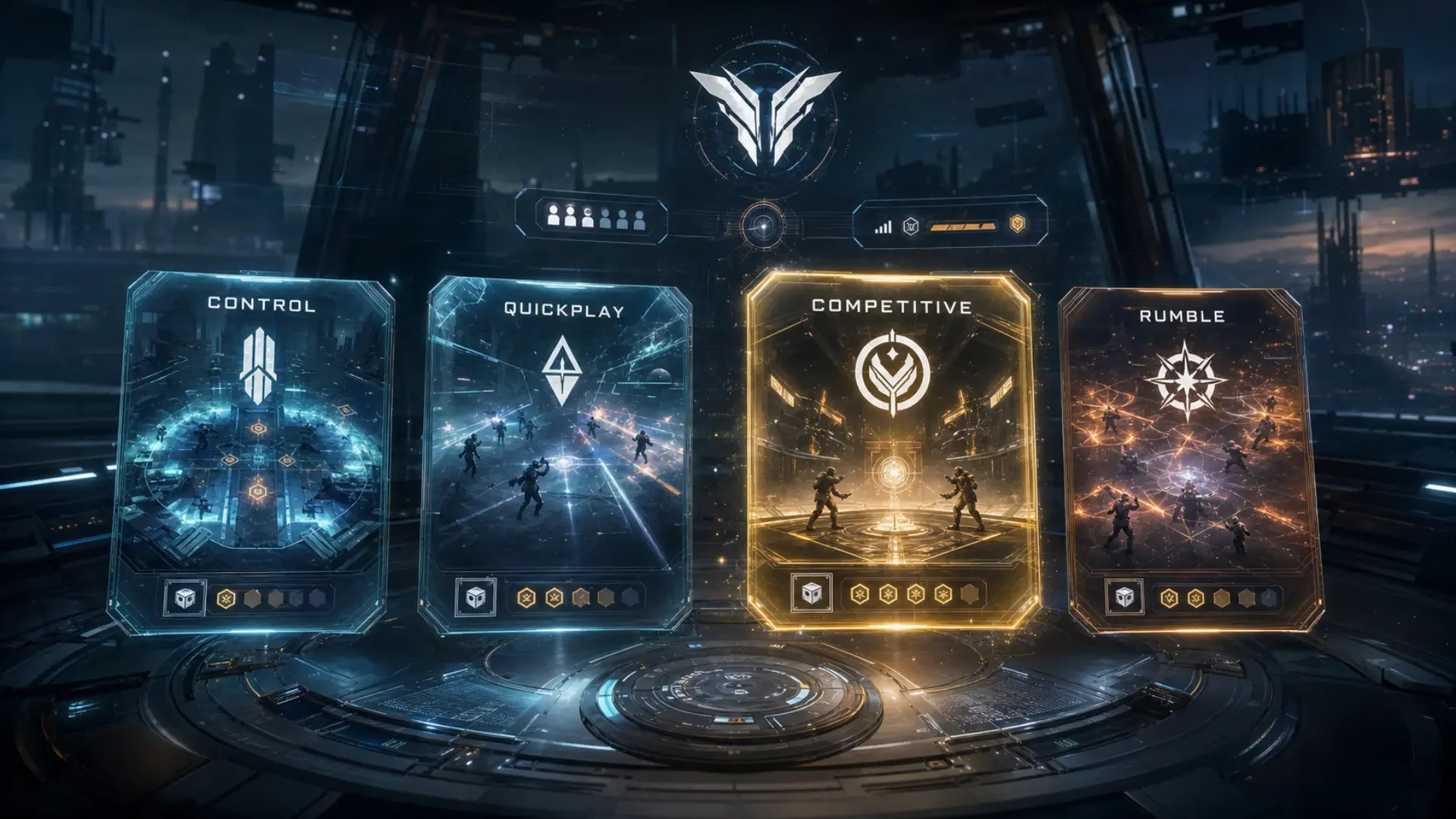
Every PvP playlist, including Private Match, now launches from Crucible Ops rather than a separate Crucible node.
Crucible Ops: where every PvP mode lives now
Everything PvP launches from one place. Open the Director, select Crucible Ops, and every playlist including Private Match sits on that single screen. Lord Shaxx still handles reputation and engram focusing from the Tower Courtyard.
The permanent playlists
These are always available, outside of the weeks when Iron Banner replaces two of them.
Control: the 6v6 objective mainstay. Capture and hold zones, with eliminations worth more the more zones your team holds.
Quickplay: casual 6v6 with a rotating cast of party-style modes.
Small Team Quickplay: smaller fireteam skirmishes, rotating daily.
Competitive: ranked 3v3 with its own division ladder.
Rumble: six-player free-for-all. First to 20 final blows wins, or whoever has the most final blows when the eight-minute timer expires.
Sparrow Racing League: returned as a permanent activity in 9.7.0 and lives under Crucible Ops rather than as a seasonal event.
Private Match: custom lobbies with mode, map and rule selection. Note that Private Matches do not award Portal rewards.
What rotates through the 6v6 and 3v3 slots
Patch notes call these the 6v6 and 3v3 rotators; in game they are the Quickplay and Small Team Quickplay cards. The lists are worth knowing, because which mode is live changes what loadout makes sense.
6v6 rotator: Mayhem, Rift, Relic, Momentum, Scorched, Supremacy, Clash, Zone Control and Hardware Mix.
3v3 rotator: Survival, Heavy Metal, Elimination, Hardware Mix, Arena Collision, Lockdown and Clash.
Two things trip people up here. Arena Collision is a 4v4 mode despite sitting in the small-team rotator, and Heavy Metal is the vehicle-combat mode, so bringing an anti-vehicle option matters more than your duelling loadout when it comes up. A heavy sword earns its slot there in a way it never does in Control, and our Eighty Six god roll options cover what to look for.
Weekend and event playlists
Trials of Osiris runs every Friday through to the Tuesday weekly reset, on every week that Iron Banner is not active. It is 3v3 elimination, you collect a Passage from Saint-14 in the Tower Hangar before queuing, and seven wins earns you a trip to the Lighthouse.
Iron Banner runs for one week in every four. When it is live it does not add a node, it replaces two: Control becomes Iron Banner Control, and Quickplay becomes Iron Banner Quickplay, which rotates between Tribute, Fortress and Eruption. Lord Saladin runs it, and Trials is suspended for that week.
How matchmaking works in each playlist
If your lobbies feel wildly inconsistent between playlists, this is why. Bungie uses different matchmaking models depending on the node, and it published the breakdown in its 29 May 2026 This Week in Destiny post.
Control and Iron Banner Control: Outlier Protection, which is the only skill-based model still in use. If queue times run long it automatically reverts to Open Skill.
Competitive: rank-based. You are matched against players near your own division rather than your raw skill rating.
Trials of Osiris: passage-based. Your card state, not your skill, determines who you face.
Quickplay, Small Team Quickplay and Iron Banner Quickplay: Open Skill, meaning connection quality does most of the work.
The practical takeaway is that Control is where you will meet the most consistently matched opponents, and Quickplay is where lobby quality swings hardest. If you are practising a specific duel skill and want repeatable difficulty, Control is the better lab. If you want low-pressure games to warm up in, Quickplay is more forgiving on average but occasionally throws you into a lobby full of people who queue nothing else. How often Outlier Protection falls back to Open Skill depends on how many people are queuing, so it is worth keeping an eye on current player population trends.
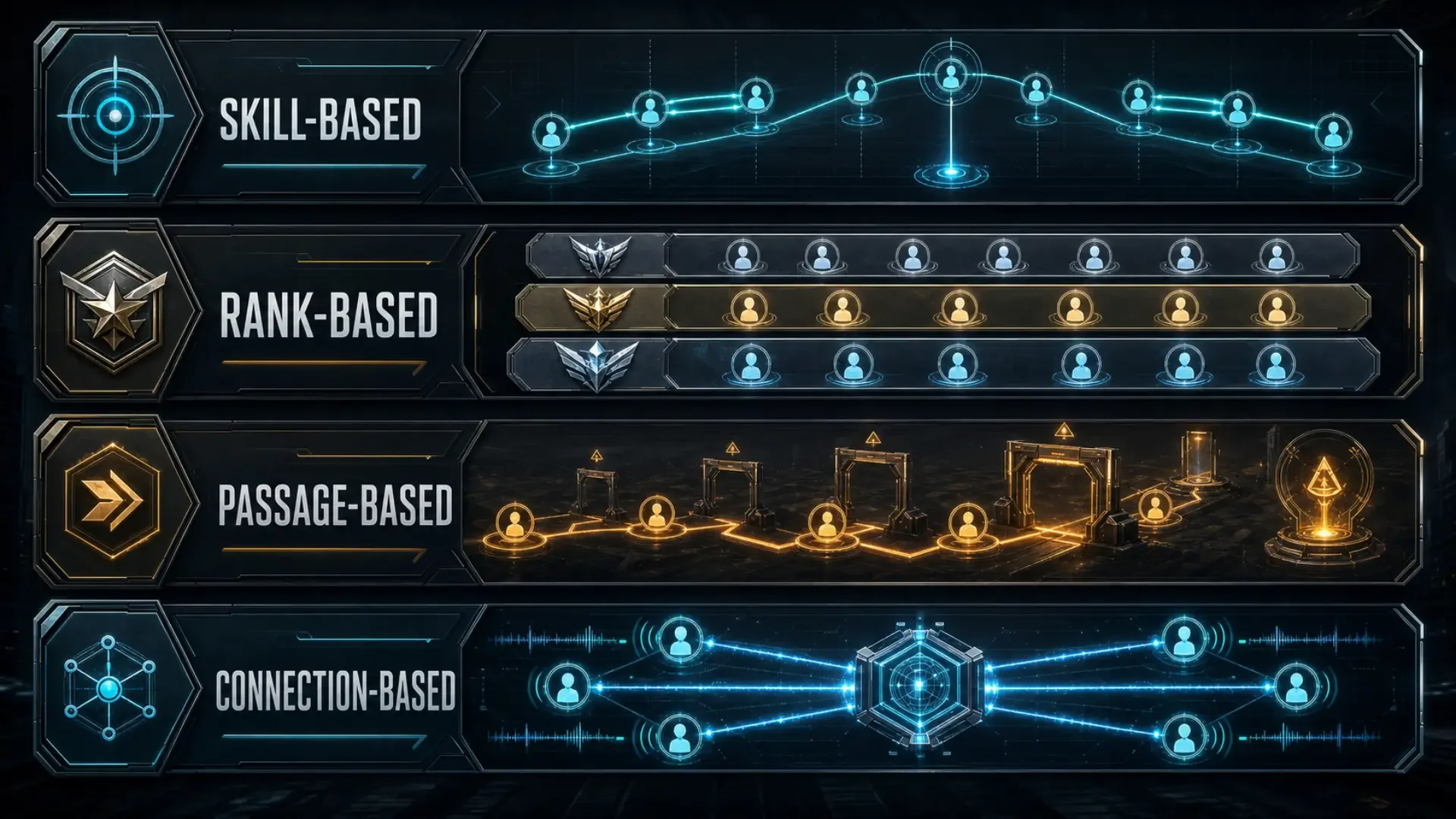
Only Control and Iron Banner Control use skill in matchmaking, and both revert to Open Skill when queues run long.
Armor 3.0 stats for Destiny 2 PvP
This is where the largest gap sits between what guides say and what the game does. Armor 3.0 replaced the old six stats and moved the scale from 0-100 with ten tiers to 0-200 with every single point counting.
What replaced Mobility, Resilience and Recovery
The mapping is direct:
Mobility became Weapons
Resilience became Health
Recovery became Class
Discipline became Grenade
Intellect became Super
Strength became Melee
The retired stats were not deleted from the game's behaviour, they were fixed at set values for everyone. Mobility is locked at what 30 used to feel like for Titans and Warlocks and 40 for Hunters, Resilience is locked at what 100 used to be, and Recovery sits at roughly the old 60. If you miss the old movement speed, leg armor Mobility mods bring it back, and stacking three of them lands you around what 90 Mobility once felt like.
The stats that decide duels
Three stats do most of the work in the Crucible.
Weapons: below 100 it improves reload and handling speed. Above 100 it adds a damage bonus against other players that tops out around 6%, and gives ammo bricks a chance to contain more than the standard amount.
Health: below 100 it grants flinch resistance up to 10% and increases how much healing you get from an Orb of Power. Above 100 your shields begin recharging up to 25% more quickly and take up to 50% less time to refill. The extra shield capacity in that same band, worth up to 20 points, is specified against combatants only, so it does nothing for you in the Crucible.
Class: below 100 it drives class ability cooldown. Above 100 it grants an overshield when you cast your class ability, and this is the important part - that overshield reaches 0-40 HP in PvE but only 0-10 in the Crucible. Dodge and Thruster hold it for five seconds, Barricade and Rift for ten.
Flinch resistance is the reason Health remains the safest first investment for most players. Winning a mid-range trade usually comes down to who keeps their reticle on target while being shot at.
The ability stats
Grenade and Melee follow the same shape. Below 100 they improve the base cooldown of the ability and how much energy you gain from external sources. Above 100 they add ability damage: up to 65% for Grenade and up to 30% for Melee, which includes powered, unpowered and Glaive melees.
Super behaves differently, and this is the claim older guides most often get backwards. The Super stat does not reduce your base Super cooldown at all. Below 100 it improves the Super energy you gain from damaging targets and from external sources, and above 100 it adds up to 45% Super damage. In PvP, where you deal far less total damage than in a strike, that distinction changes how much the stat is worth to you.
Ability-led builds still have a place in the Crucible, and our Praxic Blade build notes show how far the ability stats can be pushed.
Why every point now counts
Under the old system a stat of 74 and a stat of 76 both gave you a tier 7 bonus, so points between breakpoints were wasted. That is no longer true. Investment scales continuously, and ability recharge was retuned to match: below roughly 30 in a stat your abilities come back more slowly than they used to, at around 70 they match the old rates, and above 70 they beat them.
Tier 5 armor is the ceiling, rolling up to 75 points before masterworking and 90 after, with 11 mod energy and a tuning mod slot that lets you trade five points of one stat for five of another to hit exact breakpoints.
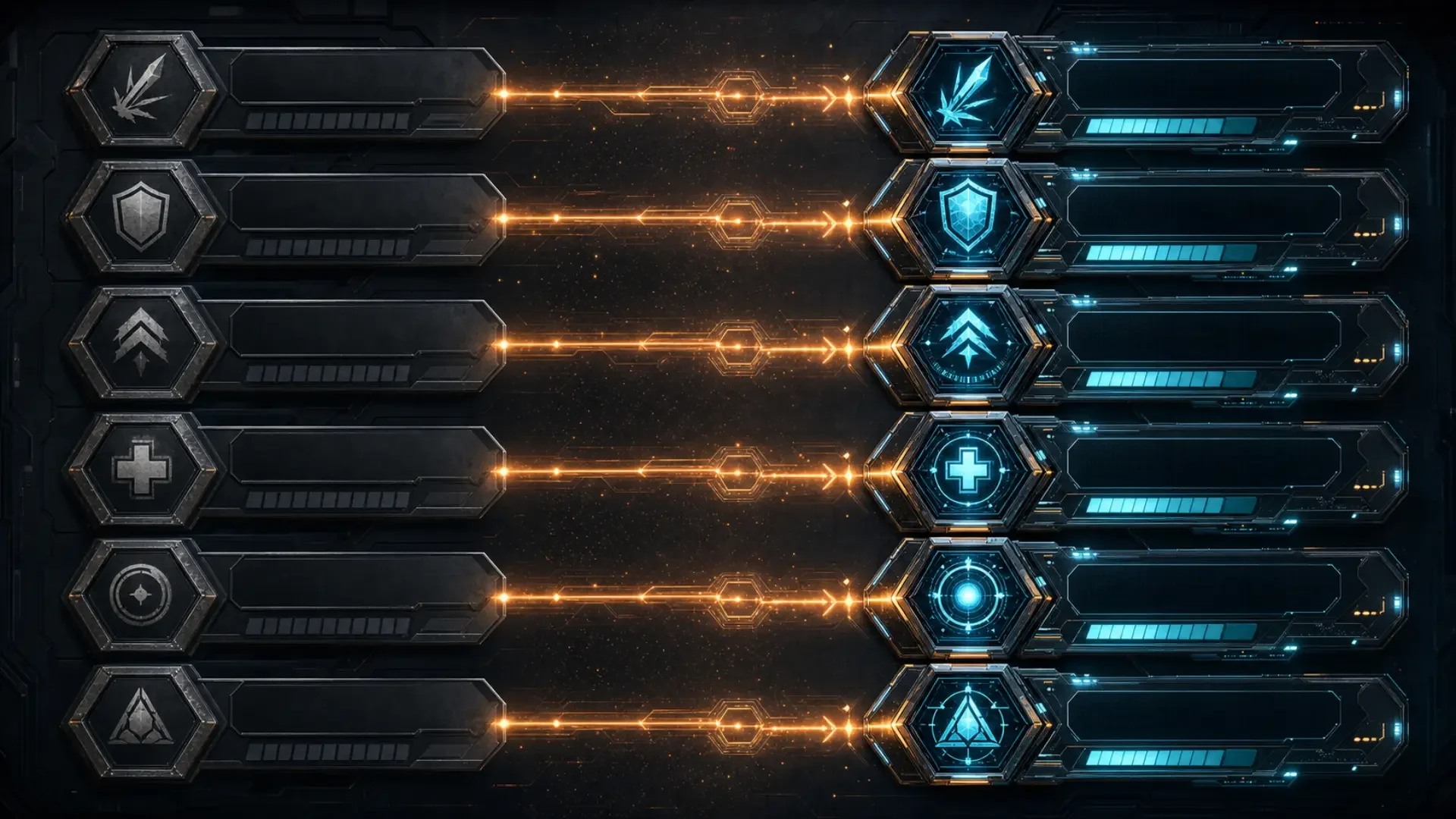
Mobility, Resilience, Recovery, Discipline, Intellect and Strength were replaced by Weapons, Health, Class, Grenade, Super and Melee.
Building a PvP loadout in the final sandbox
Loadout building splits into three questions: what the playlist allows, how you feed your special weapon, and which mods survive the energy budget. Individual weapon picks sit outside this guide, though our Wolfsbane performance breakdown is a useful worked example of judging a gun on its numbers rather than its reputation.
Artifact mods are off in Trials and Competitive
Update 9.7.0 disabled artifact mods in both the Trials and Competitive playlists. This is the single most disruptive build change for anyone returning after a break. If a loadout only feels strong because of an artifact perk, it is not a Trials loadout. Test builds in Competitive before you take them into a Passage, not the other way around.
Several exotics were also retuned specifically against other players in that same update. ACD/0 Feedback Fence no longer provides any damage resistance versus other Guardians, and Nothing Manacles had its extra seekers cut from four to three with reduced range and lifetime.
The ammo economy
Special and Heavy ammo both run on meters that fill from defeats rather than from damage dealt, and primary weapons are the main driver of that progress. The Weapons stat above 100 also gives bricks a chance to contain more ammo than standard.
This is why a primary-first loadout is not a compromise in the current sandbox. Your primary is what earns your shotgun ammo. Pushing a fight with an empty special and no meter progress is a far more common way to lose a round than picking the wrong gun. Wave-frame launchers are among the more forgiving special picks for players who struggle to convert meter into kills, and Dead Messenger acquisition is still open if you want one.
Scoring was also rebalanced in 9.7.0, with point gains from Special and Heavy ammo kills and assists and from Super kills all reduced by 33%, and Glaive melee point gains cut by 20%. Primary-weapon gunplay carries more of your match score than it did.
Mods that earn their energy
Four mod families do genuine work in the Crucible and are worth the energy cost over PvE staples. Swapping between a PvE and a PvP mod set every session is tedious in game, which is the strongest argument for managing loadouts with DIM.
Targeting mods on the helmet, which improve target acquisition for the matching element.
Unflinching mods on the chest, which stack with the Health stat to keep your aim steady under fire.
Dexterity mods on the arms, for faster weapon swaps between primary and special.
Font mods paired with Time Dilation, which raise armor stats while slowing the armor charge decay that would otherwise strip the bonus every ten seconds.
Competitive divisions and how the ladder works
Competitive is a 3v3 ranked playlist with its own progression separate from Crucible reputation. Bungie's Crucible Competitive Divisions guide documents the promotion, relegation and decay rules.
You start at Untested and climb through Copper, Bronze, Silver, Gold, Platinum, Adept and Ascendant. Each division splits into three tiers, and they count downward, so tier III is the bottom of a division and tier I is the top. That help article stops at Ascendant, but the 9.7.0 patch notes add an emblem tied to an Ascendant 0 standing. Following the same descending convention, that sits above Ascendant I, so there is progression left for players at the very top.
Your first seven matches are placement matches. After that, three factors move your Division Rating beyond simply winning or losing. If your rating sits far below your actual skill you gain more per win and lose less per loss, and the reverse applies if it sits above. The same adjustment applies based on your skill relative to the rest of the lobby, and on your individual performance within a match.
Reaching the top tier of a division puts you into a Promotion Series. Win two of three and you move up. Fail and you stay put and lose the equivalent of two losses' worth of points.
Relegation works differently, and the trigger is worth knowing precisely: it fires when you are at the bottom floor of your division and lose two matches in a row. Win two of your next three and you keep your standing. Fail and you drop to the next division down, landing at its top tier, so Gold III relegates to Silver I.
From Gold III upward, inactivity costs you rank. Each completed match awards one Decay Protection Point up to a maximum of twelve, and every weekly reset subtracts three. Hold fewer than three at reset and you lose 250 Division Points instead. Being partway through a Promotion or Relegation Series when the weekly reset hits drops you from that series, and in the case of relegation that means you go down.
Update 9.7.0 also replaced the old seasonal Competitive weapon reward with a Competitive Gear reward drawing from a pool of both weapons and armor, and added an emblem that requires 77 Competitive playlist wins.
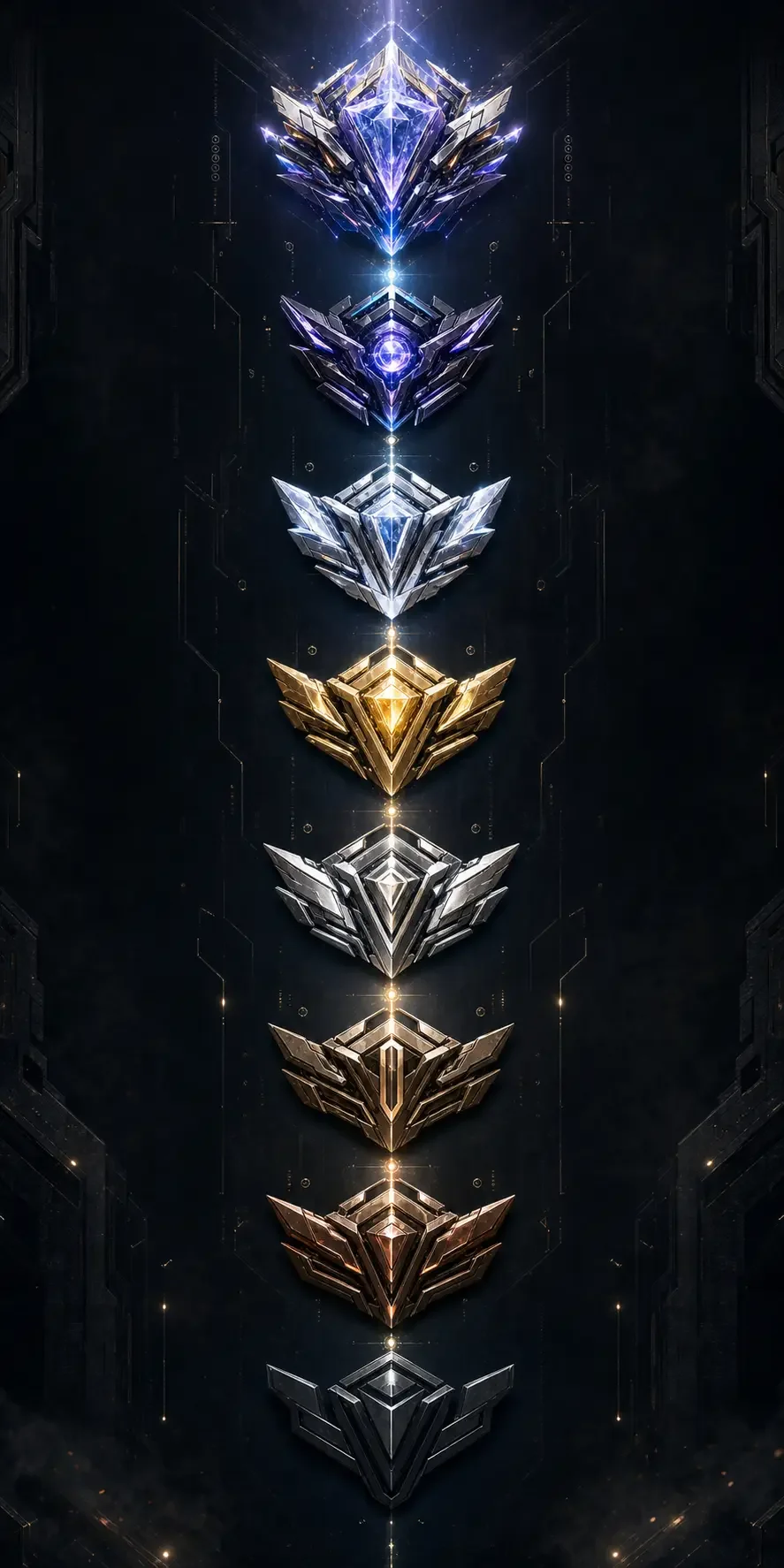
Divisions climb from Untested to Ascendant, each split into three tiers where III is the floor and I is the ceiling.
Crucible fundamentals that still decide fights
Systems change. These do not.
Team-shooting beats duelling. Two players putting rounds on one target win almost every exchange regardless of skill gap, which is why the strongest habit you can build is repositioning toward a teammate rather than toward the enemy.
Peek-shoot rather than hold angles. Standing in a sightline gives every enemy on the map free information and a free first shot. Stepping out, firing, and returning to cover means you choose when the fight starts.
Read your radar constantly. Most deaths in the Crucible come from a player you never saw, and the radar told you about a large share of them.
Do not overstay a won duel. Your shields are down, your magazine is short, and anyone nearby has heard exactly where you are. Reset first.
In standard Control, hold two zones rather than chasing all three. A three-zone cap flips spawns and sends the enemy team behind you, so two zones held cleanly is a more reliable win condition than a triple cap that collapses thirty seconds later. Iron Banner Control is the exception: capturing all three triggers The Hunt, which locks the zones and is worth going for as a group.
Respect spawn pressure. On maps built around a strong side, being pinned in the weaker spawn is a losing position that gets worse the longer you fight it. Rotate early through a safe route rather than repeatedly challenging the same angle. Spawn logic is a property of map design, and a good deal of the current rotation predates the Destiny Content Vault, which is worth knowing if you are revisiting vaulted Crucible maps you last played years ago.
Where older PvP guides now mislead you
Six specific corrections, because these appear repeatedly across guides that still rank well.
"Head to the Crucible node and pick Quickplay or Competitive." Both playlists still exist, but not as separate nodes on a Crucible menu. They are cards inside Crucible Ops on the Destinations screen.
"Run Resilience at tier 7 to 10." Resilience does not exist, and neither do stat tiers. The equivalent stat is Health, on a 0-200 scale where every point counts.
"Max Mobility for Hunter movement." Mobility is now a fixed value for everyone, adjustable only through leg armor mods. The stat slot it used to occupy is Weapons, which does something completely different.
"Build around the seasonal artifact for Trials." Artifact mods are disabled in Trials and Competitive.
"Queue Trials of the Nine or Countdown." Neither exists. Modes that survived, like Survival and Elimination, moved into the rotator lists above rather than sitting on permanent nodes.
"This meta will shift next season." There are no more seasons and no further content updates planned, so the broad picture holds. Individual outliers can still be switched off server-side, but you are no longer chasing a quarterly rebalance.
Most guides still ranking for this topic describe stats and menus that were replaced by Armor 3.0 and Update 9.7.0.
Check this before you queue
A guide cannot stay current on live adjustments, so treat this as a pointer rather than a fixed list. Two sources are worth knowing, and they cover different things.
Bungie's Destiny 2 disabled items list tracks gear that cannot be equipped at all. At the time of writing it shows nothing disabled. What it does not cover is the more common Crucible case: a set bonus or a map switched off inside specific playlists while the item itself stays equippable. Those go out through the Destiny 2 Team accounts on Bluesky and X, which the disabled items article itself points to.
Three such changes were in effect as of mid-August 2026, all announced in late July.
The four-piece Bountiful Munitions bonus from the Gambit Cyberserpent Null set was switched off across Crucible Ops playlists including Iron Banner, after an exploit that let players generate near-unlimited Special ammo. The four-piece From the Storm bonus on the Europa Crystocrene set was disabled in Crucible the following day, because it was granting Frost Armor during combat when it should only build up out of combat. Both continue to work normally in PvE, and no return date has been given for either.
The map Disjunction was also pulled, first from Iron Banner over Fortress zone placement problems and then from additional Crucible playlists. It remains playable in Private Matches.
Worth knowing as a pattern rather than a snapshot: with the team wound down, Bungie's response to a broken set bonus is now to switch it off rather than retune it. Expect the list of disabled bonuses to grow rather than shrink, and check before you build around a set bonus you have not used recently. We track the wider sequence in our rundown of the final round of hotfixes.
Key takeaways
Every PvP playlist now launches from the Crucible Ops hub. The old separate Crucible nodes were deprecated in Update 9.7.0.
Armor 3.0 replaced the six classic stats. Health succeeds Resilience and is the safest early investment, thanks to flinch resistance.
The scale runs to 200 and every point counts. Several bonuses above 100 shrink or vanish against players.
The Super stat improves energy gained from damage, not your base Super cooldown.
Artifact mods are off in Trials and Competitive, so build around base kits.
Only Control and Iron Banner Control use skill-based matchmaking, and both fall back to Open Skill on long queues.
Competitive relegation triggers at your division floor after two straight losses, and decay begins at Gold III.
Frequently asked questions
Is Destiny 2 PvP still active in 2026?
Yes. Destiny 2 remains fully playable and the Crucible remains a permanent activity. Update 9.7.0 was the final major content patch, but every PvP playlist including Trials of Osiris and Iron Banner continues to run on its normal schedule.
Where is the Crucible in Destiny 2 now?
The Crucible lives in the Crucible Ops hub on the Destinations screen in the Director. Bungie deprecated the legacy Crucible activity nodes in Update 9.7.0 and consolidated every playlist, including Private Match, into that single hub to concentrate the matchmaking population.
What replaced Mobility, Resilience and Recovery in Destiny 2?
Mobility became Weapons, Resilience became Health, and Recovery became Class. Discipline, Intellect and Strength became Grenade, Super and Melee respectively. The change arrived with Armor 3.0 at Edge of Fate, and the old stats were fixed at set values for all players.
What is the best stat for Destiny 2 PvP?
Health is the strongest general-purpose investment because it grants up to 10% flinch resistance, which directly improves your ability to land shots while under fire. Weapons is the next priority for handling and reload speed. Beyond that, prioritise the ability stat your build actually uses.
How many placement matches are in Destiny 2 Competitive?
Seven. You play a series of seven placement matches before the system assigns you a division, after which your Division Rating rises with wins and falls with losses. Your rating relative to your skill, your skill relative to the lobby, and your individual performance all adjust how many points each result is worth.
Is Trials of Osiris still running?
Yes. Trials of Osiris runs every weekend from Friday through to the Tuesday weekly reset, except on weeks when Iron Banner is active. Collect a Passage from Saint-14 in the Tower Hangar before queuing, and seven wins grants access to the Lighthouse.
How often does Iron Banner return?
Iron Banner runs for one week in every four. When it is active it replaces Control with Iron Banner Control and Quickplay with Iron Banner Quickplay, which rotates between Tribute, Fortress and Eruption. Trials of Osiris does not run during an Iron Banner week.
Do artifact mods work in Trials of Osiris?
No. Update 9.7.0 disabled artifact mods in both Trials of Osiris and the Competitive playlist. Any build that depends on a seasonal artifact perk will not function in either, so test loadouts against their base kits before committing to a Passage.
Does the Super stat make your Super charge faster?
Partly, but not in the way most guides describe. The Super stat improves the Super energy you gain from damaging targets and from external sources, and it does not reduce the base cooldown timer. In PvP, where total damage output is much lower than in PvE, that limits how much the stat returns.
Will the Destiny 2 PvP meta change again?
Large balance passes are very unlikely. Update 9.7.0 was the final major update and no further content updates are planned, but Bungie has continued to ship targeted server-side changes, including a Crucible set bonus disable and a map removal after the update. Expect the broad meta to hold while individual outliers can still be switched off. If you are wondering what comes after Destiny 2, that is a separate question with no confirmed answer yet.